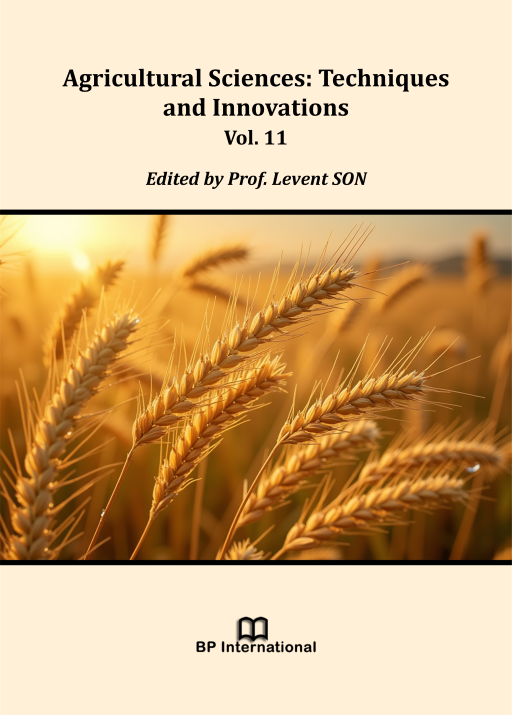
This book covers key areas of agricultural science. The contributions by the authors include abiotic stress tolerance, agricultural robotics, algorithmic accountability, artificial intelligence, balanced fertilisation, biological control, biopesticides, blockchain traceability, chlorophyll content, climate change mitigation, climate resilience, climate-smart agriculture, controlled environment agriculture, crop productivity, CRISPR-CAS genome editing, data governance, deep learning, digital divide, digital twins, disease detection, drought tolerance, economic threshold level, edge computing, environmental sustainability, exogenous proline, fertigation, food loss and waste reduction, food security, genomic selection, grain yield, harvest index, heat-stress recognition, high-throughput phenotyping, host-plant resistance, integrated pest management, internet of things, irrigation scheduling, machine learning, marker-assisted backcrossing, marker-assisted selection, molecular breeding, multi-omics integration, nitrogen fertilisation, nutrient-use efficiency, pest monitoring, phosphorus fertilisation, pollen viability, precision agriculture, pulse crops, remote sensing, reproductive-stage salinity tolerance, resource-use optimisation, salinity stress, smart fertilisation, supply chain integration, unmanned aerial vehicles, variable-rate technology, water-use efficiency, yield monitoring. This book contains various materials suitable for students, researchers, and academicians in the fields of agricultural science.

Editor(s)
Prof. Levent SON
Mersin University, Turkey.

Short Biosketch

ISBN 978-81-69986-19-9 (Print)
ISBN 978-81-69986-18-2 (eBook)
DOI: https://doi.org/10.9734/bpi/asti/v11

This book covers key areas of agricultural science. The contributions by the authors include abiotic stress tolerance, agricultural robotics, algorithmic accountability, artificial intelligence, balanced fertilisation, biological control, biopesticides, blockchain traceability, chlorophyll content, climate change mitigation, climate resilience, climate-smart agriculture, controlled environment agriculture, crop productivity, CRISPR-CAS genome editing, data governance, deep learning, digital divide, digital twins, disease detection, drought tolerance, economic threshold level, edge computing, environmental sustainability, exogenous proline, fertigation, food loss and waste reduction, food security, genomic selection, grain yield, harvest index, heat-stress recognition, high-throughput phenotyping, host-plant resistance, integrated pest management, internet of things, irrigation scheduling, machine learning, marker-assisted backcrossing, marker-assisted selection, molecular breeding, multi-omics integration, nitrogen fertilisation, nutrient-use efficiency, pest monitoring, phosphorus fertilisation, pollen viability, precision agriculture, pulse crops, remote sensing, reproductive-stage salinity tolerance, resource-use optimisation, salinity stress, smart fertilisation, supply chain integration, unmanned aerial vehicles, variable-rate technology, water-use efficiency, yield monitoring. This book contains various materials suitable for students, researchers, and academicians in the fields of agricultural science.