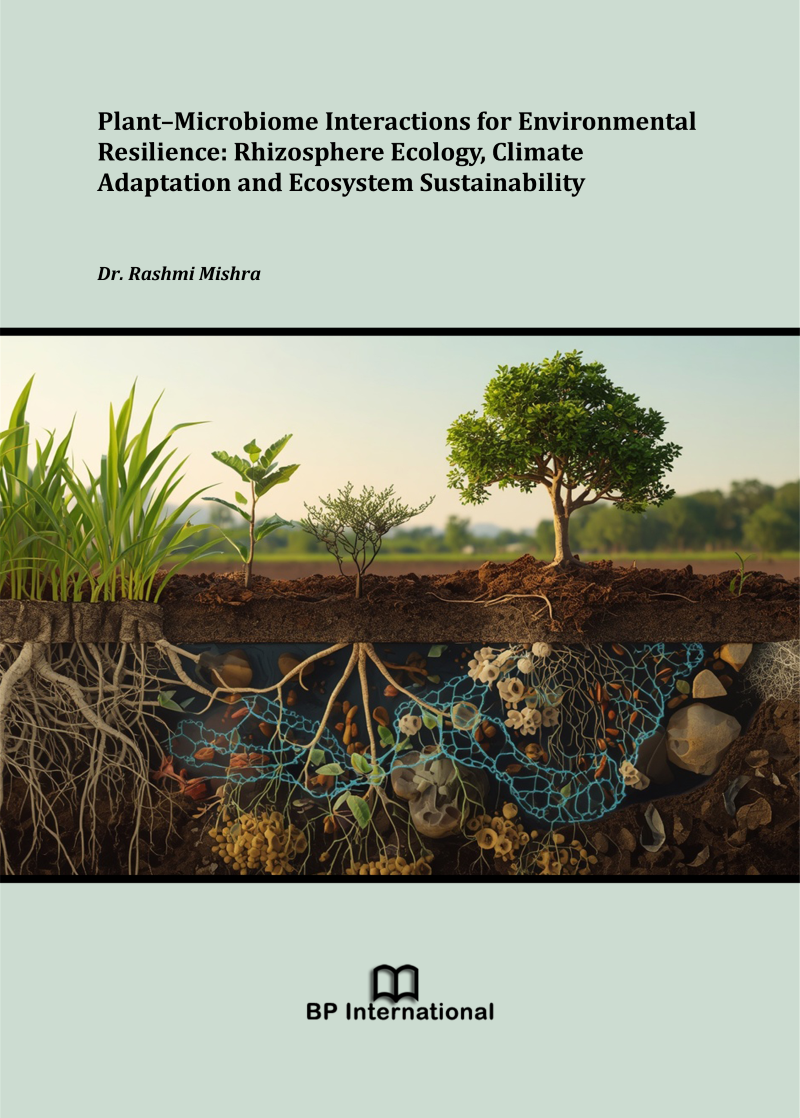
Plant–microbiome interactions have emerged as a vital area of research for understanding how plants adapt to environmental change and how ecosystems maintain their stability and productivity. The rhizosphere, as a dynamic interface between plant roots, soil, and diverse microbial communities, plays a central role in nutrient acquisition, stress tolerance, soil health, biogeochemical cycling, and ecological resilience. Plant–Microbiome Interactions for Environmental Resilience: Rhizosphere Ecology, Climate Adaptation and Ecosystem Sustainability brings together contemporary perspectives on the ecological and functional significance of plant-associated microorganisms. The book explores rhizosphere community assembly, root exudate-mediated microbial interactions, plant–soil feedbacks, microbial contributions to tolerance against drought, heat, salinity, and flooding, and emerging approaches for microbiome engineering. It also examines the importance of plant–microbe partnerships in ecological restoration, sustainable agriculture, and the recovery of degraded ecosystems. By integrating fundamental ecological concepts with emerging applications, this volume highlights both the opportunities and limitations of microbiome-based approaches. It is intended to serve as a useful resource for researchers, students, academicians, environmental scientists, and practitioners interested in plant biology, microbial ecology, climate adaptation, and ecosystem sustainability.
Author(s)
Dr. Rashmi Mishra
University Department of Botany, Dr. Shyama Prasad Mukherjee University, Ranchi, Jharkhand-834008, India.
ISBN 978-81-17350-31-7 (Print)
ISBN 978-81-17350-30-0 (eBook)
DOI: https://doi.org/10.9734/bpi/mono/978-81-17350-31-7
Plant–microbiome interactions have emerged as a vital area of research for understanding how plants adapt to environmental change and how ecosystems maintain their stability and productivity. The rhizosphere, as a dynamic interface between plant roots, soil, and diverse microbial communities, plays a central role in nutrient acquisition, stress tolerance, soil health, biogeochemical cycling, and ecological resilience. Plant–Microbiome Interactions for Environmental Resilience: Rhizosphere Ecology, Climate Adaptation and Ecosystem Sustainability brings together contemporary perspectives on the ecological and functional significance of plant-associated microorganisms. The book explores rhizosphere community assembly, root exudate-mediated microbial interactions, plant–soil feedbacks, microbial contributions to tolerance against drought, heat, salinity, and flooding, and emerging approaches for microbiome engineering. It also examines the importance of plant–microbe partnerships in ecological restoration, sustainable agriculture, and the recovery of degraded ecosystems. By integrating fundamental ecological concepts with emerging applications, this volume highlights both the opportunities and limitations of microbiome-based approaches. It is intended to serve as a useful resource for researchers, students, academicians, environmental scientists, and practitioners interested in plant biology, microbial ecology, climate adaptation, and ecosystem sustainability.