Author(s)
Dr. Dejene Alemayehu
Kaw Nation Environmental Department, Kaw City, Ok 7464, United States.
Dr. Raghavan Srinivansan
Blackland Research and Extension Center, Texas A&M AgriLife Research, Temple, TX, United States and Department of Ecology and Conservation Biology, Texas A&M University, College Station, TX,United States.
Katie Mendoza
Blackland Research and Extension Center, Texas A&M AgriLife Research, Temple, TX, United States.
Dr. Dawn Jourdan
University of Oklahoma 660 Parrington Oval, Norman, Ok 73019, United States.
ISBN 978-93-88417-00-6 (Print)
ISBN 978-93-88417-48-8 (eBook)
DOI: https://doi.org/10.9734/bpi/mono/978-93-88417-00-6
Climate change is increasingly affecting ecosystems, communities, and economies around the world, leading to more frequent and severe events such as wildfires, storms, floods, and droughts. These challenges are particularly pronounced in vulnerable regions like the southern United States, where the interaction between environmental changes and human activities tests our collective resilience and adaptability.
This book serves as a roadmap for striking a balance between preserving cultural heritage and the urgent need for sustainable adaptation. It advocates for the integration of Traditional Ecological Knowledge (TEK), drawing on the wisdom of Indigenous communities to enhance contemporary land management. By collaborating with and honouring time-tested techniques, we can improve agricultural systems, strengthen community ties, and foster a deeper connection to the land.
The book highlights strategies such as establishing cooling centres, upgrading infrastructure, and monitoring health risks to ensure communities remain prepared and have access to essential resources. Economic resilience is also emphasised through the promotion of sustainable agriculture, renewable energy, and innovative eco-tourism, all supporting both environmental stewardship and cultural respect.
Additionally, the book calls for thoughtful dialogue, collaboration, and actionable solutions to mitigate climate-related threats. Ultimately, it inspires readers to engage with these strategies and join a collective movement toward sustainability, resilience, and the preservation of biodiversity for future generations.
This book addresses the concerns of tribal nations and societies regarding climate change. Many tribes are particularly vulnerable due to their deep connection with the natural environment, which is vital for their culture, health, and livelihoods. Understanding vulnerability is essential for grasping how climate change impacts different populations, regions, and ecosystems.
During my lengthy association with the Kaw Nation, I wished to leave behind reference notes for future generations to build upon and to contribute to a comprehensive environmental history. I hope this book will stimulate increased interest and research on the future impacts of climate change, not only on the Kaw Lake watershed but also on the Arkansas River watershed and the southern region in general.
In summary, the document advocates for a holistic approach to climate change—one that combines tradition with innovation, prioritises preparedness, and fosters economic opportunities while protecting the planet and its inhabitants.
Content
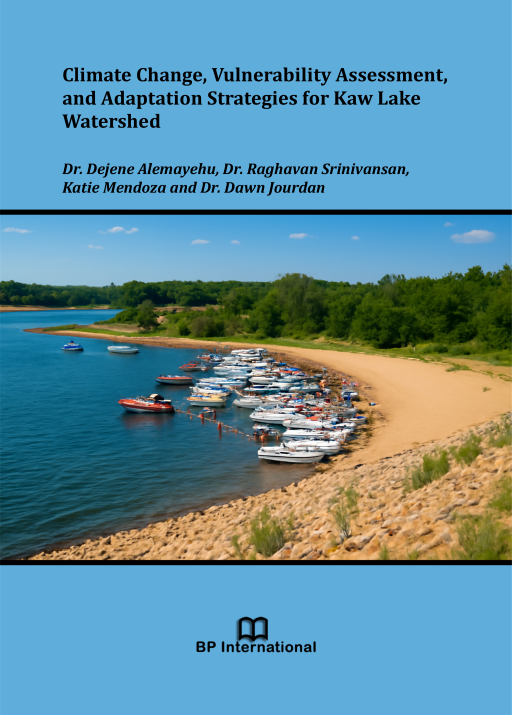
Climate Change, Vulnerability Assessment, and Adaptation Strategies for Kaw Lake Watershed
Dr. Dejene Alemayehu, Dr. Raghavan Srinivansan, Katie Mendoza, Dr. Dawn Jourdan
DOI:
10.9734/bpi/mono/978-93-88417-00-6
Page: 1-89