Formulation and Antibacterial Assessment of a Herbal Cream Containing Biophytum sensitivum D.C.
Haripriya G *
Department of Pharmacognosy, JSS College of Pharmacy, Mysuru, JSS Academy of Higher Education and Research, Mysuru, Karnataka, India.
Krithika R
Department of Pharmacognosy, JSS College of Pharmacy, Mysuru, JSS Academy of Higher Education and Research, Mysuru, Karnataka, India.
LisMaria Joseph
Department of Pharmacognosy, JSS College of Pharmacy, Mysuru, JSS Academy of Higher Education and Research, Mysuru, Karnataka, India.
Suresh J
Department of Pharmacognosy, JSS College of Pharmacy, Mysuru, JSS Academy of Higher Education and Research, Mysuru, Karnataka, India.
*Author to whom correspondence should be addressed.
Abstract
Aim: Biophytum sensitivum DC Oxalidaceae is a traditional medicinal plant for treating bacterial infections. The goal of the current study was to create and assess an antibacterial cream of hydroalcoholic extract from Biophytum sensitivium DC.
Materials and Methods: This plant was extracted using the hydroalcoholic method and further evaluated for antibacterial activity against Escherichia coli (E. coli) by agar well diffusion method.
Results: The presence of phenols and flavonoids in the extract of Biophytum sensitivum DC Oxalidaceae exhibited significant activity on E. coli organism and activity which is compatible with standard antibiotics.
Conclusion: The chemical constituents were tested to identify phenols and flavonoids. The use of hydroalcoholic extract resulted in antibacterial activity, and an antibacterial cream was further formulated.
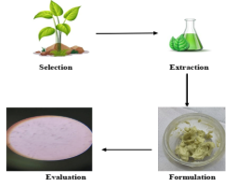
GRAPHICAL ABSTRACT
Keywords: Biophytum sensitivum, hydroalcoholic extract, antibacterial activity, diffusion method, Escherichia coli, phenols, flavonoids